
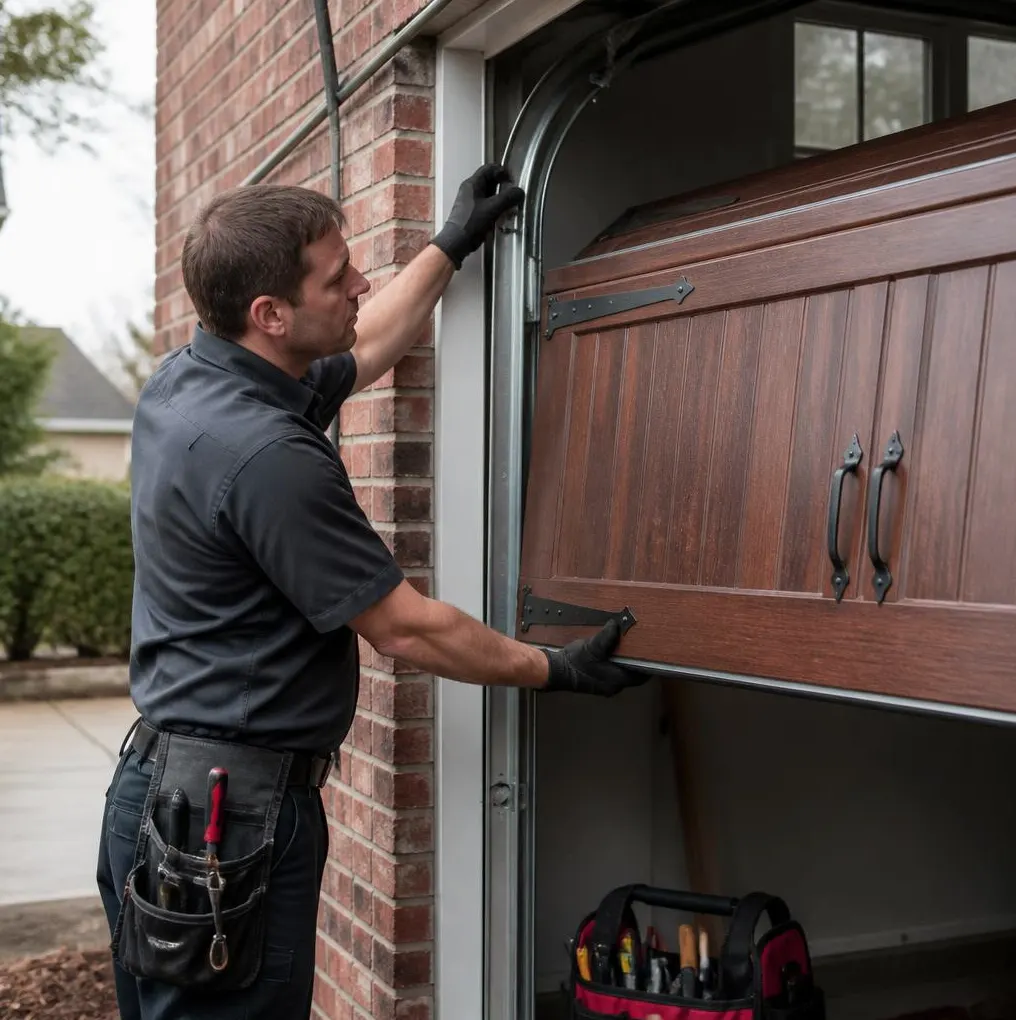
What a Technician Sees After a Windstorm Rolls Through
The call usually comes in the morning after a rough night: wind gusts rattled the house, and now the garage door won't open, or it's bowed out in the middle like a bent can. On arrival, the pattern is familiar. Track brackets have pulled away from the wall studs. A panel is creased or caved in from flexing back and forth all night. Sometimes the door popped off its rollers entirely, and the opener is straining against a door that's no longer sitting square in the frame. In a lot of these cases, the homeowner never knew the door was vulnerable until the wind found the weak spot.
Why the Garage Door Is Often the Weakest Wall in the House
Most exterior walls are short spans of solid, fastened material. A garage door is the opposite: it's the largest opening in the house, made of lightweight panels, hung on a track, and held shut mostly by its own weight, a couple of locks, and spring tension rather than being bolted into the structure like a wall. When wind pushes against that much surface area, the door has to resist it almost entirely through its hardware and panel strength.
There's also a pressure problem. If a garage door fails and blows in or out during a severe storm, the sudden change in pressure inside the garage can put stress on the roof structure and walls that weren't designed for that kind of load. That's why building codes in many high-wind regions require wind-rated garage doors on new construction — the door isn't just an opening, it's part of how the whole structure handles wind.
Why Fall Is the Right Time to Check This
Spring gets the reputation for storms and tornado watches in this part of Indiana, but fall brings its own round of strong wind events as cold fronts push through ahead of winter. Those fronts can produce gusty thunderstorms and straight-line winds before temperatures drop for good. Once the ground freezes and ice and road salt show up, it's a lot less pleasant to be out in the driveway tightening bolts or swapping weatherstripping. Doing the inspection now, while the weather's still workable, means the door is in good shape before both the next wind event and the harsh winter stretch that follows.
Signs Your Door Won't Hold Up Well
- The door visibly flexes or bows when you push on a panel from outside.
- You can see daylight or feel a draft along the bottom seal or side tracks.
- The door shakes or rattles noticeably on windy days, even when closed and locked.
- Track brackets are loose, or you can wiggle them by hand.
- The door has only a single horizontal reinforcement strut, or none at all, across a wide panel.
- Rollers are worn, cracked, or the track itself looks bent or misaligned.
- Weatherstripping along the bottom and sides is cracked, flattened, or pulling away.
Concrete Steps to Reinforce What You Already Have
- Tighten and inspect hardware. Check every bolt on the track brackets, hinges, and roller carriages. Loose hardware is usually the first thing to give way under repeated wind pressure.
- Add reinforcement struts. Horizontal struts bolted across the back of wide panels (especially 16-foot double doors) stiffen the panel and spread wind load across the whole door instead of letting it flex in the middle.
- Replace worn rollers and check the track alignment. A door that isn't gliding smoothly is more likely to bind, jump the track, or strain the opener during a wind event.
- Refresh the weatherstripping and bottom seal. Beyond keeping out drafts, a tight seal reduces the gap wind can get under or push against.
- Check spring balance. An unbalanced door puts extra strain on the opener and hardware every time it operates, which adds up over a season of use and makes failure more likely when conditions get rough.
- Know your manual release. If the opener loses power or jams during a storm, you should be able to disengage it and operate the door by hand without guessing how.
The Trade-Offs Worth Knowing
A full wind-rated garage door — heavier gauge steel, built-in bracing, reinforced track — costs more upfront than a standard door, generally landing in a higher national price bracket for installation. For an attached garage with a wide door facing open ground, that extra cost can be worth it, since door failure risks more than just the door itself. A retrofit reinforcement kit is a cheaper middle ground, but it only works within certain limits on door age, material, and width — an older or already-warped door may not be a good candidate, and replacement makes more sense at that point.
When to Call Greenwood Garage Door Pro
If your door already shows bowing, won't close evenly, or came off track after a wind event, that's an Emergency Garage Door Service call — the longer a damaged door sits, the more strain it puts on the opener and the more exposed the garage interior is to weather. If the door is still working but you're not sure it would hold up to a real wind event, a Garage Door Maintenance & Tune-Up covers the hardware check, spring balance, roller and track inspection, and weatherstripping assessment described above, done before winter makes that kind of work harder on everyone. We serve Greenwood, Indianapolis, Whiteland, Bargersville, Franklin, Center Grove, New Whiteland, and Southport.
Call Greenwood Garage Door Pro today to get your garage door checked and reinforced before the next windstorm comes through Greenwood, IN.